

This article explores the connection between psychological resilience and lifespan, based on a large study of adults over 50 in the United States. The research found that people with higher levels of resilience had a significantly lower risk of death, even when accounting for...
All News Articles

We explore the critical role of social support in building psychological resilience. Drawing on current research, this highlights how supportive relationships—whether with family, peers, or communities—help individuals recover from stress, manage adversity, and maintain mental health. Social support enhances emotional safety, reduces isolation, and strengthens coping skills, making it one of the most powerful protective factors against long-term psychological harm. The piece encourages students and professionals to actively build and engage with supportive networks, and it offers access to peer-based resilience programs through Milestone Resilience Care.

Dr. Heather Littleton, Director of Research Operations at the Lyda Hill Institute for Human Resilience, has received a $1.2 million NIH grant to adapt and evaluate the Community Enhancement and Recovery (CARE) program for sexual minority survivors of bias-motivated violence. This project builds on evidence that trauma-informed support from trusted friends and family can help prevent PTSD and promote recovery...
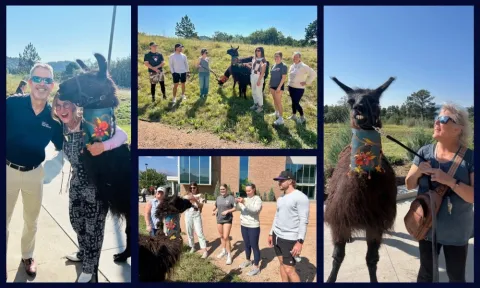
By incorporating interactions with animals like llamas into therapy sessions, Milestones helps clients build emotional regulation, resilience, and trust. Events like this show how the healing power of human-animal connection can extend beyond clinical settings into our everyday campus community.

Writing the Director’s Corner is always a humbling experience. I often wonder whether my reflections will resonate with those who read them. As I sat down to write this piece, I found myself thinking about a dear colleague, Dr. Dan Gottlieb, and the profound role that...

Two UCCS psychology faculty members, Dr. Heather Littleton and Dr. Steve Bistricky, have co-edited a special section of the Journal of Aggression, Maltreatment and Trauma that explores new ways of understanding psychological resilience. Featuring contributions from members of the Lyda Hill Institute for Human Resilience, the collection highlights innovative research on how people adapt and grow through adversity...

Teens today face unique challenges, from academic stress to social pressures and uncertainty about the future. The Lyda Hill Institute for Human Resilience’s GRIT-TEEN program gives them real-world tools to manage stress, build resilience, and connect to supportive resources. Share this free program with the teens in your life—it could give them coping skills and confidence that last a lifetime.

At Milestones Resilience Care, we are deeply committed to supporting the healing journeys of individuals who have experienced trauma. Our approach centers on building resilience through a diverse array of therapeutic modalities. Among our newest offerings...